Kyoto Travel Guide / The world cultural heritage


Wooden building and Japanese garden admitted from the world.
Beauty of wooden building, artistic Japanese garden, and harmony of the both. There are a wooden building and a Japanese garden admitted from the world in Kyoto. The world cultural heritage round of Kyoto is one of the enjoyments of sightseeing in Kyoto.
Kamo Wakeikazuchi Shrine
The Aoi Matsuri Festival is festival of this Shrine.
Access / City Bus and Kyoto Bus : Kamigamo-jinjamae Stop
City Bus and Kyoto Bus : Kamigamo-misonobashi -walk 5 min
TEL / 075-781-0011
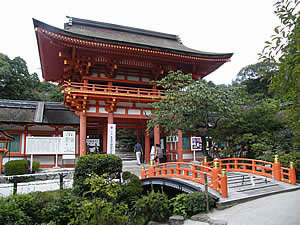
This Shrine already had considerable influence by the end of the 7th century.
This Shrine buildings existed in their present form by the beginning of the 11th century, but gradually deteriorated thereafter, and were restored in 1628.
The present buildings of the The honden hall and gonden holl were rebuilt in 1863.
They are built in the Nagare "flowing" style. And they are designated as National Treasures.
In addition to these two buildings, this shrine contains a haiden (worship hall) and 33 other shrine buildings.
They are all believed to date from the 1628 restoration.
And they are all designed as Important Cultural Assets.
The Aoi Matsuri Festival is festival of this Shrine. It is one of the "Three Major Festivals" of Kyoto.
Kamomioya Shrine (Shimogamo Shrine)
This shrine is one of the oldest shrines in Kyoto
Access / Keihan Rlwy : Demachiyanagi -walk 10 min
City Bus : Shimogamo-jinjamae -walk 3 min
TEL / 075-781-0010
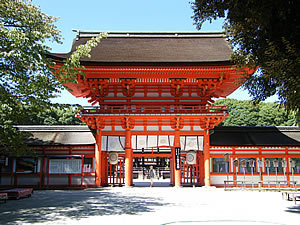
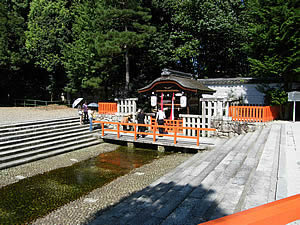
This shrine is one of the oldest shrines in Kyoto.
It is founded before the Heian-kyo period (794-1192).
The east and west main buildings were rebuilt in 1863.
They are designated as National Treasures.
Many other buildings are designated as Important Cultural Assets.
The natural forest in this shrine is popularly known as “Tadasu-no-mori".
This forest is designated as a Historic Site by the national government.
“The Aoi festival” is held on May 15th every year.
Kyoo Gokokuji Temple (Toji Temple)
It was constructed next to the Rajomon gate in 796 to guard Sakyo, Eastern kyoto, when the national capital was relocated to Kyoto
Access / Kintetsu Rlwy : Toji Stn. -walk 5 min
City Bus : Toji-higashimonmae stop
TEL / 075-691-3325
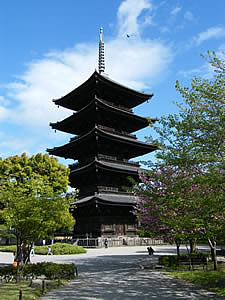
This temple is the head temple of the Shingon sect of the Buddahism.
It was constructed next to the Rajomon gate in 796 to guard Sakyo, Eastern kyoto, when the national capital was relocated to Kyoto. In 823, this temple was granted to Kukai (Kobo Daishi) and renamed the Kyoo Gokokuji Temple, thus becoming the main training temple of the Shingon sect.
Kondo hall is designated as a National Teasure.
The Daishido building (designated as a National Treasure) is also known as the "Meido" because it enshrines the image of the saint Kukai. It is also known as one of the few remaining examples of Heian era palatial architecture.
In 1644, Tokugawa Iemitsu rebuilt the five-storied pagoda (designated as a National Teasure) to a height of 55 meters; it is now the tallest existing wooden pagoda in Japan.
December 21, the last memorial day of the year, is particularly notable, asa a remarkable number of worshippers are in attendance.
Kiyomizu-dera Temple
Cherry blossoms of spring looked at from a famous Kiyomizu veranda are also special.
Access/ City Bus : Kiyomizumichi / Gojozaka -walk 10 min
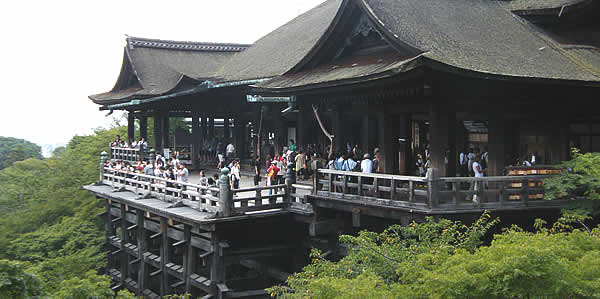
This temple was built in 778 by "Sakanoue no Tamuramaro".
Most of the present buildings was rebuilt in 1633 by Iemitsu Tokugawa, third shogun of the Edo period.
The main hall is designated as National Treasure. This hall includes the famous Kiyomizu veranda assembled without one nail. Cherry blossoms of spring looked at from a famous Kiyomizu veranda are also special.
The three-story pagoda is the largest in Japan.
Daigoji Temple
The oldest five story pagoda in kyoto completed in 951.
It is a National Treasure.
Access / Keihan Bus and City Bus : Daigo-sanpoin Stop.
Subway Tozai Line : Daigo Stn.-walk 10 min
TEL / 075-571-0002
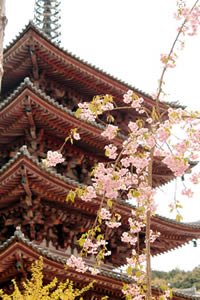
Daigoji is the head temple of the Daigoji School of the Shingon sect of Buddhism.
The temple was originally founded in 874 by priest Rigen.
The temple has about 40,000 items of National Treasures and Important Cultural Assets.
The oldest five story pagoda in kyoto completed in 951.It is a National Treasure.
All structures except for the five-stoy pagoda were destroyed by fire.
Thereafter, the temple was rebuilt by Hideyoshi Toyotomi.
The Kondo Hall was transferred from a temple in Kishu Province in 1599.
It is a National Treasure.
The garden of Sanpoin Temple is a reminiscence of hideyoshi's power.
It is the Special Historic Site and the Special Scenic Spot.
Hideyoshi Toyotomi held a cherry blossom-viewing party here in 1598.
Today, the Hotaiko(Hideyoshi) cherry blossom-viewing parade is held on the second Sunday in April.
Ninnaji Temple
It was also called as the Old Imperial Palace of Omuro.
Access / Keifuku Rlwy : Omuro Sta. -walk 5 min
City Bus : Omuro-Ninnaji Stop.
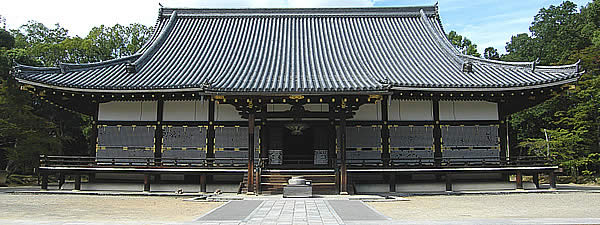
This temple was originally built by Emperor koko, and later it was completed by Emperor Uda.
It was also called as the Old Imperial Palace of Omuro.
The buildings of this temple were rebuilt after being burnt down in 1467. Some of those buildings still remain. They are the Kondo Hall, Sanmon Gate, Meido Hall and five-storied pagoda.
The Kondo Hall is a National Treasure.
Sanmon Gate, Meido Hall and five-storied pagoda are Important Cultural Properties.
A lot of temple treasures are stored to the Reihokan.
Amitabha Buddha statue of the principal image is included. It is a National Treasure
Cherry blossoms of Ninna-ji temple are called "The Omuro Zakura".
It is famous because it is that short when characterizing.
Byodo-in Temple
The Amida Buddha hall is called "Ho-o-do"(Phoenix Hall).
And it is pictured on back of the ¥10 coin.
Access / Keihan Rlwy : Uji Station -walk 10 min
JR Rlwy : Uji Station -walk 10 min
TEL / 0774-21-2861
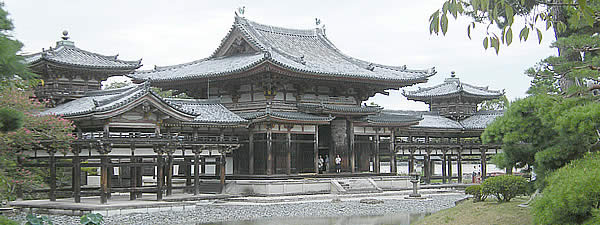
Original was a villa of the Fujiwara family.
It was converted from the villa into the temple by Yorimichi Fujiwara in 1052.
The Amida Buddha hall was built in 1053.
This hall is the only original building remaining.
It is also called "Ho-o-do"(Phoenix Hall).
And it is pictured on back of the ¥10 coin.
Its graceful externals is like a paradise dreamed of by the Heian era aristocrat.
In the treasure pavilion, there are a lot of art works at the Heian era, and general is open to the public.
Ujigami Shrine
The main shrine (the honden) is a National Treasure.
The worship hall (the hiden) is a National Treasure.
Access / Keihan Rlwy : Uji Station -walk 13 min
JR Rlwy : Uji Station -walk 18 min
TEL / 0774-21-4634
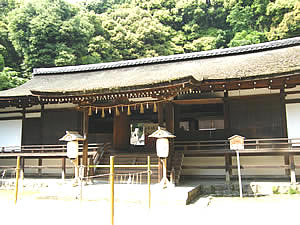
The main shrine(the honden) was built in the late heian period in the nagare style with four pillars and a sweeping canopy roof.
It is a National Treasure.
The worship hall (the hiden) was built in the start of Kamakura period.
It is a National Treasure.
The Kirihara-no-mizu spring within the shrine grounds is known as one of the Seven Famous Waters of Uji.
Saihoji (Kokedera) Temple
It has a "garden around the pond", which is shaped like the Chinese character meaning "heart."
Access / Kyoto Bus : Kokedera Stop walk 5 min
City Bus : Kokedera-michi Stop
TEL / 075-391-3631
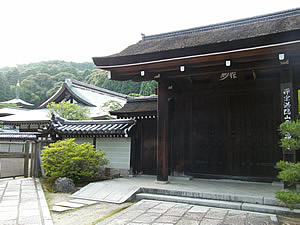
Saihoji Temple belongs to the Rinzai school of Buddhism.
This temple is popularly known as Kokedera ("Moss Temple").
It was founded by the monk Gyoki.
In 1339 this temple was rebuilt by the priest Muso Soseki as a center of Zen Buddhism training.
The garden was designated by Muso Soseki himself.
It has a "dry landscape garden".
It also has a "garden around the pond", which is shaped like the Chinese character meaning "heart."
Tenryuji Temple
The temple was founded by Shougun Ashikaga Takauji.
Access / Keifuku Rlwy : Arashiyama -walk 3 min
Hankyu Rlwy : Arashiyama -walk 15 min
City Bus : Randen Tenryujimae -walk 1 min
Tel / 075-881-1235
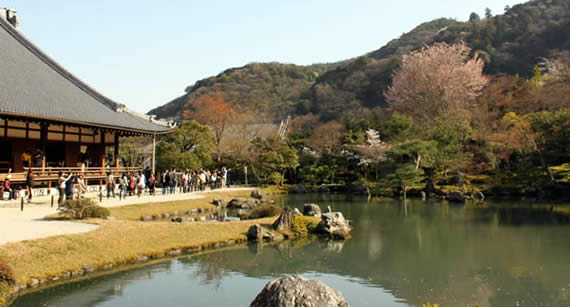
Tenryuji Temple is the head temple of the Tenryuji school of the Rinzai sect of Buddhism.
The temple was founded by Ashikaga Takauji in 1339 to honor the emperor Godaigo, and Muso Soseki served as its first chief priest.
The income by the trading vessel that had been called Tenryujisen was supplied as construction expenses of the temple. And, the temple came to prosper extremely.
Afterwards, the buildings in the temple were destroyed by fire, and the present buildings are rebuilt in the Meiji Period and later.
The stroll garden around the pond was designated by Muso Soseki.
It is designated as a scenic and historic site by gaverment.
Kinkakuji Temple
This temple originated from the villa of Shogun Yoshimitsu Ashikaga.
Access / City Bus : Kinkakujimichi -walk 3 min or Kinkakujimae -walk 1 min
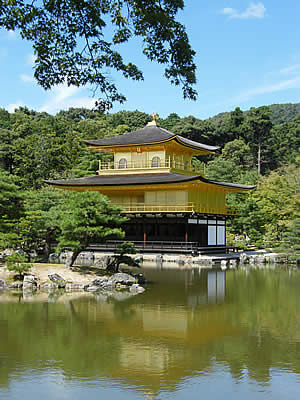
This temple originated from the villa of Shogun Yoshimitsu Ashikaga. It was converted into a temple from the villa by Muso kokushi after Yoshimitsu's death. The kinkaku building was destroyed by fire and rebuilt in 1955.
Kinkaku is the wooden three-story building. The second and third floors are covered with gold leaf, and the building is crowned by a chinese Phoenix statue.
Ginkakuji Temple
It was originally constructed as villa of Ashikaga Yoshimasa.
After Yoshimasa's death it was converted to a temple.
Access / Keihan Rlwy : Demachiyanagi Stn.
City Bus : Ginkakujimichi stop -walk 10 min
City Bus : Ginkakujimae stop -walk 5 min
TEL / 075-771-5725
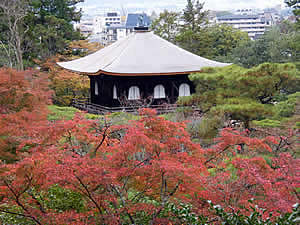
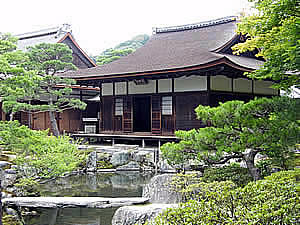
This temple belong to the Rinzai sect of the Buddhism.
It was originally constructed as villa of Ashikaga Yoshimasa (8th shogun of the Muromachi period) in 1482.
After Yoshimasa's death it was converted to a temple.
The pavilion is a 2-story structure with a pyramidal roof.
It is called "Ginkaku".
It is designated as a National Treasure.
Togudo (a National Treasure) in the northern part of the garden is the only structure untouched by fire. It contains a 4.5-tatami mat Tearoom that is believed to be the prototype of Japanese Tearooms.